
Introduction to Fundamentals of Geotechnical Engineering
The fundamentals of geotechnical engineering explain how soil, rock, and groundwater behave under different loads and environmental conditions. In simple terms, this field studies the ground beneath structures and predicts how it will react once construction begins.
In practice, every infrastructure project depends on these principles. For example, road construction, railway systems, landfill construction, retaining structures, embankments, and water infrastructure all rely on proper ground understanding. Otherwise, weak or poorly understood soil can lead to settlement, instability, or long-term failure.
Therefore, engineers apply these principles using standards such as FHWA guidelines for Mechanically Stabilized Earth (MSE) systems and BS 8006 for reinforced soil and ground improvement.
Core Concepts Behind the Fundamentals of Geotechnical Engineering
Soil Classification and Engineering Parameters
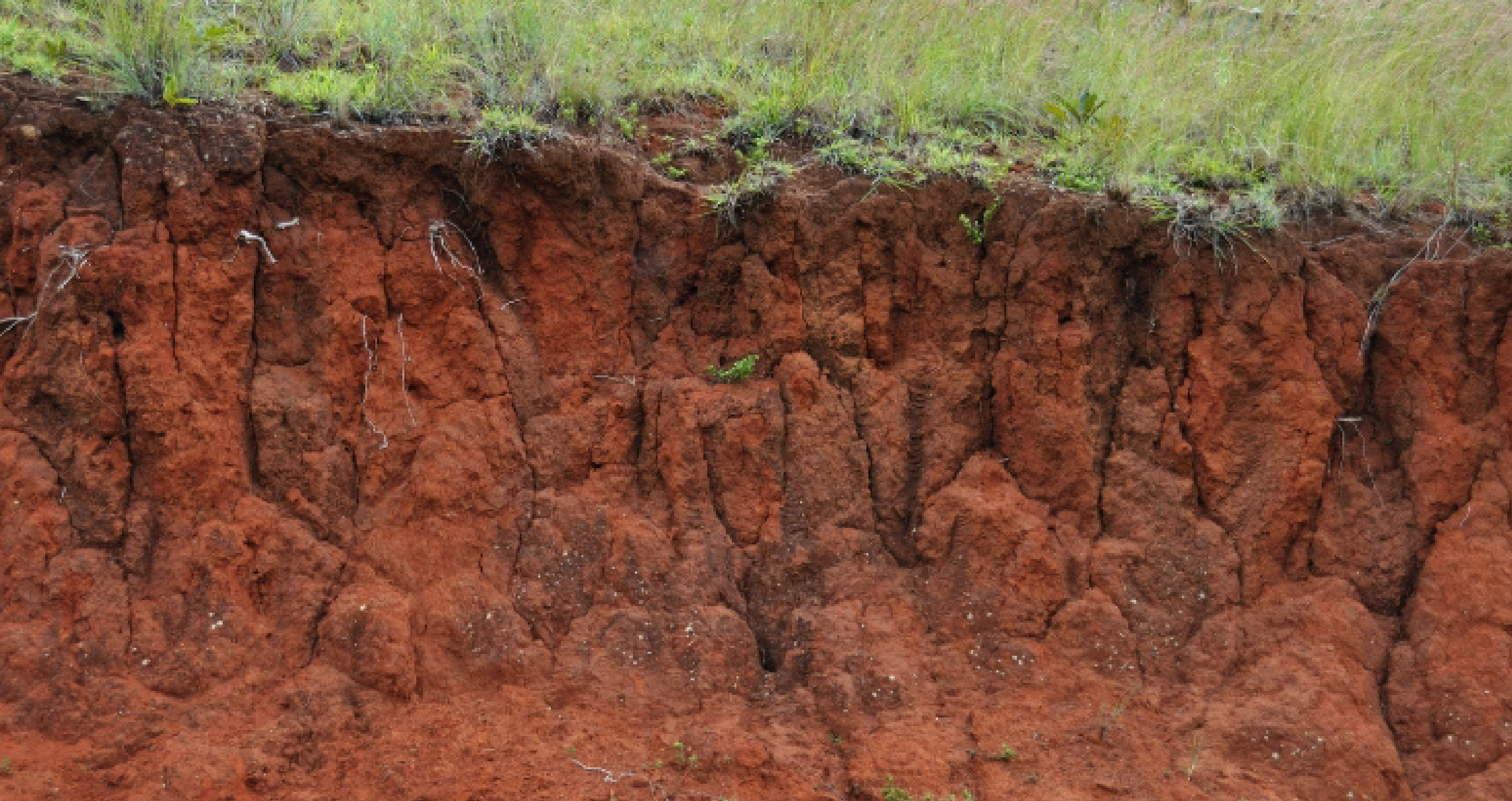
Soil is a mixed material made of clay, silt, sand, gravel, and rock fragments. Because of this variation, engineers must first identify and classify soil during site investigation.
In general, key engineering parameters include:
- grain size distribution
- moisture content
- density and compaction
- plasticity
- unit weight (γ)
- friction angle (φ)
- cohesion (c)
Together, these properties control shear strength, water flow, compression, and deformation. As a result, they directly affect foundations, pavements, slopes, and embankments.
In weak or soft soils, engineers often use geogrids and geocells to improve performance. In fact, this approach follows BS 8006 reinforcement principles.
Strength, Deformation, and Loading as Governing Factors
One key idea in geotechnical engineering is that loading controls soil behavior. Therefore, engineers must evaluate soil under different types of loads, such as:
- dead loads
- live loads
- traffic loads
- surcharge loads
- seismic loads
- hydraulic loads
In addition, shear strength controls slope and retaining stability, while compressibility controls settlement in roads and embankments.
For reinforced soil systems, FHWA design rules require engineers to check three main conditions:
First, external stability, which includes sliding, overturning, and bearing capacity.
Second, internal stability, which includes reinforcement tensile strength and pullout resistance.
Finally, global stability, which evaluates the full reinforced soil mass.
Groundwater, Effective Stress, and Drainage Control
Groundwater plays a major role in soil behavior. When water pressure increases inside soil, effective stress drops. As a result, shear strength also decreases.
Therefore, engineers always include drainage systems in geotechnical design. For example, they use geotextiles and drainage geocomposites for filtration, separation, and water control.
In many cases, drainage geocomposites such as STRATADRAIN replace thick gravel layers. They use a polymer core combined with geotextiles to carry water efficiently under load.
In FHWA MSE systems, engineers must prevent hydrostatic pressure behind retaining structures. Likewise, landfill systems combine drainage layers with HDPE liners to manage leachate and surface water safely.
Mechanism of Geosynthetics in Soil Reinforcement
Geosynthetics form a composite interaction with soil, creating a soil–reinforcement mass capable of resisting applied loads.
Barrier: HDPE liners prevent fluid migration in environmental systems
- Reinforcement: Geogrids provide tensile resistance through interlock and friction with soil
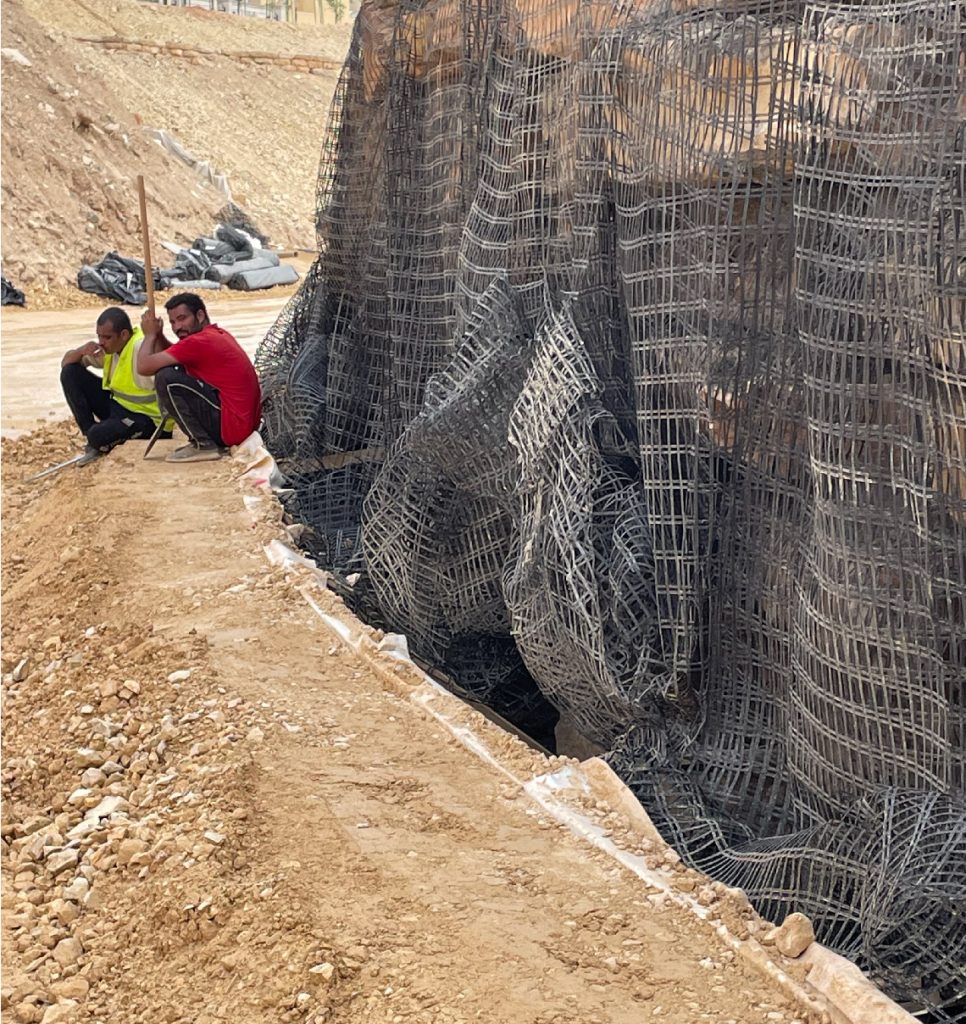
- Confinement: Geocells provide three-dimensional confinement, increasing stiffness and reducing lateral deformation
- Separation: Geotextiles prevent intermixing of soil layers
- Filtration: Geotextiles allow water passage while retaining soil particles
- Drainage: Drainage geocomposites provide high-capacity in-plane water flow
- Barrier: HDPE liners prevent fluid migration in environmental systems
Applications of Geotechnical Engineering in Infrastructure
Road and Highway Construction
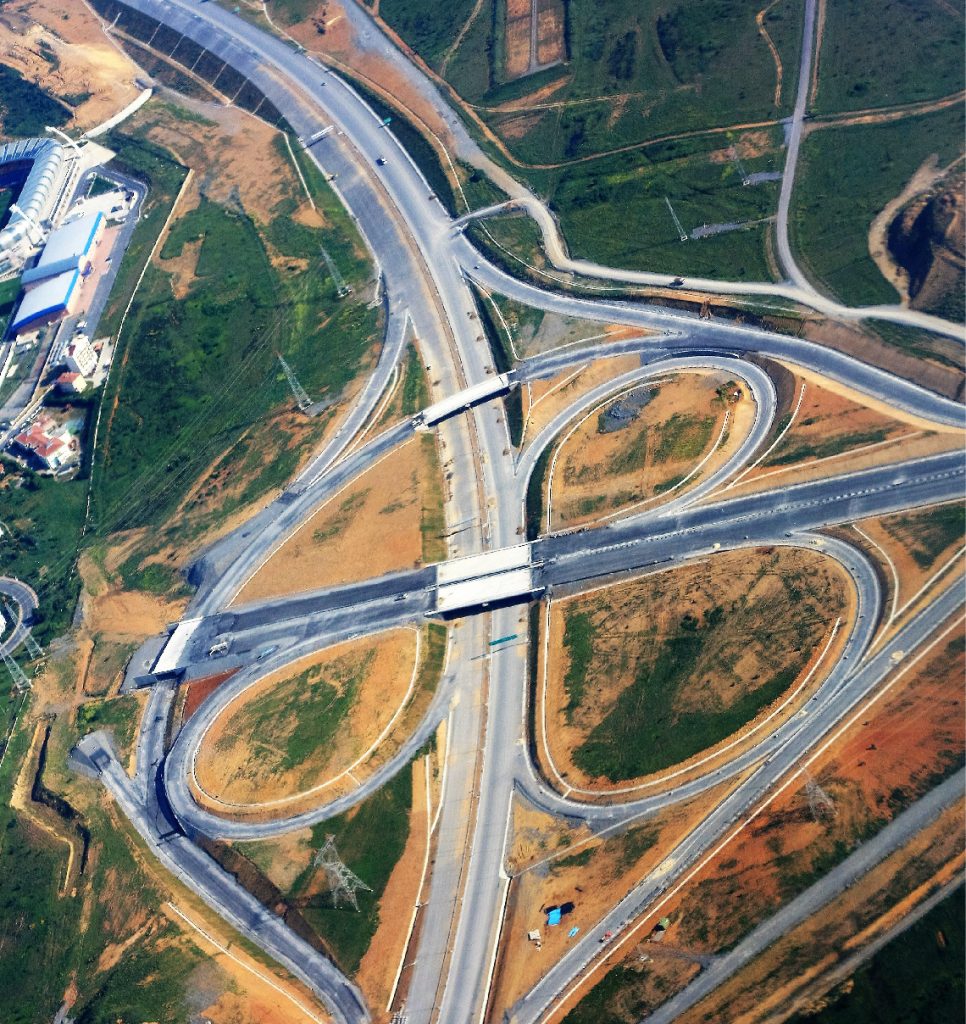
In roadway construction, failures are often caused by a combination of weak subgrade conditions and lateral spreading or excessive deformation of base layers. Geogrid reinforcement and geocell confinement improve load distribution, reduce rutting, and control deformation under repeated traffic loading, consistent with BS 8006 ground improvement practice.
Retaining Structures and Slope Stabilization
Retaining systems are designed based on lateral earth pressure derived from unit weight, friction angle, loading, and drainage conditions in line with FHWA MSE guidance.
All retaining systems require proper drainage to prevent hydrostatic pressure buildup.
Reinforced soil systems depend on the reinforced soil mass, while the facing system (concrete panels, modular blocks, welded mesh, geocell facings, or gabion-type facings) provides confinement, erosion protection, and constructability. Stability is not provided by the facing element alone.
Landfill Construction and Environmental Engineering
Landfill engineering focuses on containment, seepage control, and slope stability.
Engineered landfill capping systems include:
- HDPE liners for impermeability
- Geotextiles for protection and filtration
- Drainage geocomposites for lateral flow
- Reinforcement layers for slope stability
Design depends on waste shear strength, interface friction, and loading from waste and cover soils.
Soft Soil and Ground Improvement Approach
In soft soil conditions with low bearing capacity and high compressibility, geogrids and geocells act as ground improvement systems by distributing loads, reducing settlement, and improving composite stiffness of the soil layer without the need for deep replacement.

Sector-Based Geotechnical Solutions
Road and Highway Sector
Geogrid and geocell systems control deformation under traffic loads and improve pavement lifespan.
Railway Engineering
Subgrade stabilization reduces cyclic settlement and track deformation.
Water Infrastructure
Geotextile filtration, erosion control, and subsurface drainage geocomposites maintain hydraulic stability.
Environmental and Landfill Construction
HDPE liners, geotextiles, drainage geocomposites, and reinforced capping ensure environmental protection.
Why Fundamentals of Geotechnical Engineering Matter
Infrastructure performance depends primarily on controlling soil behavior under applied loads, though ground improvement techniques may also be required. Proper application of geotechnical principles ensures controlled settlement, stable slopes, effective drainage, and long-term structural performance in compliance with FHWA and BS 8006.
Conclusion
The fundamentals of geotechnical engineering define how soil, rock, and groundwater respond to loading and how these responses are managed through engineered systems. When applied through geogrid reinforcement, geocell confinement, reinforced soil systems, drainage geocomposites, and HDPE liner systems, infrastructure performs safely and reliably under real field conditions.