
In modern infrastructure, drainage is often overlooked—until it fails. However, when drainage systems do not perform as expected, the consequences can be severe, affecting structural stability, safety, and long-term performance.
In applications such as roadway construction, landfill construction, retaining walls, and mining operations, poor drainage leads to water accumulation within soil layers. Over time, this creates pressure, weakens the ground, and compromises the entire structure.
At MEGS, drainage is treated as a core part of geotechnical engineering. Through advanced geocomposite systems, we provide integrated solutions that control water movement, protect structures, and ensure long-term reliability across demanding environments.

What happens when drainage systems fail?
Drainage failure develops gradually, but its impact can be significant. When water is not properly managed, it begins to accumulate within soil or behind structures, creating hydrostatic pressure. This pressure pushes against retaining systems, weakens slopes, and reduces overall stability.
At the same time, increased moisture reduces soil strength, making embankments more vulnerable to settlement and failure. In roadway construction, this leads to deformation and reduced pavement lifespan. In environmental applications such as landfill construction, poor drainage can result in uncontrolled leachate movement, increasing the risk of contamination.
Why traditional drainage methods are no longer sufficient
Conventional drainage systems rely on thick layers of gravel or sand to manage water flow. While these methods have been widely used, they often lack efficiency and consistency under modern infrastructure demands.
Natural materials can clog over time, reducing drainage performance. In addition, transporting and installing large volumes of aggregate increases project costs and slows construction. As projects become more complex and performance requirements increase, these traditional methods are no longer sufficient.
How geocomposite systems solve drainage failure
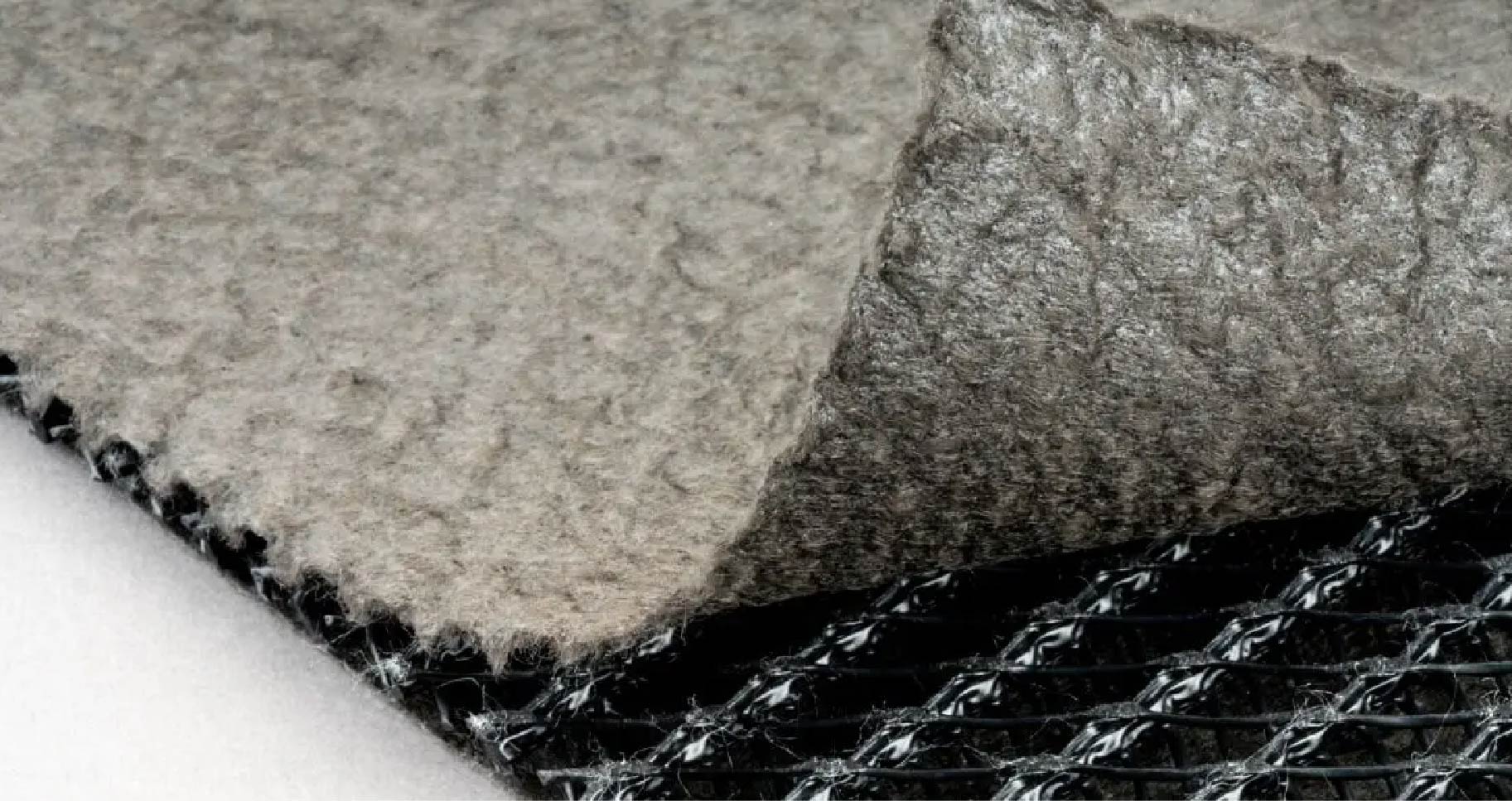
A geocomposite is an engineered combination of geosynthetic materials designed to perform multiple functions such as drainage, filtration, and separation within a single system .
At MEGS, geocomposite systems are used to replace traditional drainage layers with more efficient and reliable solutions. These systems allow water to flow quickly through their structure, reducing hydrostatic pressure and protecting surrounding soil and infrastructure.
At the same time, the geotextile component filters fine particles and prevents clogging, ensuring long-term drainage performance. By controlling water movement and reducing pore water pressure, geocomposites significantly improve soil stability in applications such as slopes, embankments, and retaining walls.
Applications of geocomposite in infrastructure systems
Geocomposite systems are widely used in infrastructure projects where drainage performance is critical. In landfill construction, they are used to collect and channel leachate while protecting surrounding soil and groundwater. In roadway construction, they act as both a drainage and separation layer, maintaining the integrity of the pavement structure.
Behind retaining walls and in slope stabilization systems, geocomposites help relieve pressure by directing water away from the structure. In mining and industrial applications, they manage seepage and support safe containment systems.
MEGS approach to geocomposite drainage solutions
At MEGS, geocomposite systems are delivered as complete solutions, combining engineering design, product supply, and professional installation.
Each project begins with a detailed analysis of site conditions, allowing the selection of the most effective drainage system. MEGS then provides advanced geocomposite materials through its collaboration with Strata Geosystems, ensuring high performance and durability.
Proper installation is critical, and MEGS ensures that each system is correctly placed and integrated with other geotechnical solutions such as geogrid, geocell, and geotextile membrane systems. This integrated approach ensures that drainage performance is maintained over the long term.

Advantages of geocomposite systems
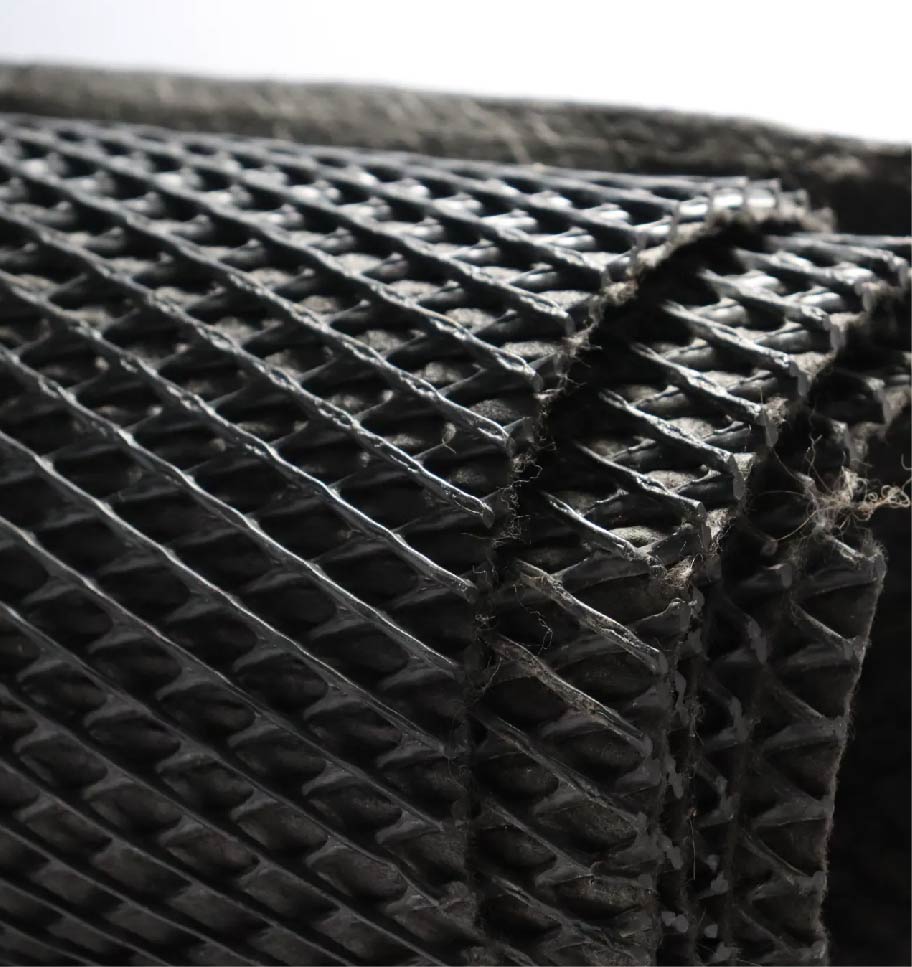
Compared to traditional drainage methods, geocomposite systems offer more consistent performance, faster installation, and reduced reliance on natural materials. Their lightweight structure simplifies handling while maintaining high durability under demanding conditions.
In addition, they support environmental sustainability by reducing material usage and minimizing environmental impact, making them a preferred solution in modern infrastructure projects.
Conclusion
Drainage failure is one of the most critical hidden risks in infrastructure. It affects soil stability, structural integrity, and environmental safety. However, with properly engineered solutions, these risks can be effectively controlled.
Geocomposite systems provide a reliable way to manage water flow, reduce pressure, and protect infrastructure from long-term damage. Through its integrated approach, MEGS transforms drainage from a potential failure point into a key element of high-performance, sustainable infrastructure.