
In modern infrastructure and environmental engineering, controlling fluid movement and preventing contamination are critical for long-term performance and safety. Whether in landfill construction, water infrastructure, or industrial containment systems, leakage can lead to serious structural and environmental risks.
Therefore, the use of an HDPE liner has become essential in projects that require reliable, impermeable containment solutions.
At MEGS, HDPE liner systems are not treated as standalone materials. Instead, they are engineered, supplied, and professionally installed as part of integrated geotechnical solutions designed to deliver durability, efficiency, and environmental sustainability across projects in Saudi Arabia and the region.

What is an HDPE liner and why is it important?
An HDPE liner is a high-density polyethylene geosynthetic membrane designed to act as an impermeable barrier that prevents liquid or gas migration.
Unlike traditional lining materials, HDPE liners offer superior resistance to chemicals, environmental stress, and mechanical loads. As a result, they are widely used in containment systems where leakage prevention is critical.
In addition, HDPE liners provide:
- High tensile strength
- Excellent chemical resistance
- Long-term durability under extreme conditions
- Flexibility to adapt to different project geometries
Therefore, they are considered one of the most reliable solutions in modern geotechnical engineering.
Key properties of HDPE liner systems
The performance of an HDPE liner depends on its material properties and engineering design.
High strength and puncture resistance
HDPE liners are manufactured with dense polymer structures, allowing them to withstand soil pressure, heavy loads, and mechanical stress during installation and operation.
Chemical and environmental resistance
They resist a wide range of chemicals, making them ideal for landfill construction and industrial containment applications.
UV and weather resistance
HDPE liners are designed to perform under extreme temperatures and prolonged sun exposure, which is particularly important in regions like Saudi Arabia.
Flexibility and adaptability
Despite their strength, HDPE liners can conform to irregular surfaces, making them suitable for complex site conditions.
Applications of HDPE liner in MEGS projects
At MEGS, HDPE liner systems are used across a wide range of infrastructure and environmental applications.
Landfill construction and containment systems
HDPE liners play a critical role in landfill construction, where they prevent leachate from contaminating surrounding soil and groundwater.
When combined with geotextile membrane layers, they provide additional protection and filtration, ensuring long-term environmental safety.
Water infrastructure and reservoirs
HDPE liners are widely used in water reservoirs, irrigation systems, and containment basins to prevent leakage and maintain water quality.
Wastewater and industrial containment
In industrial facilities, HDPE liner systems are used to contain wastewater and hazardous liquids, ensuring safe storage and treatment.
Aquaculture and water management
HDPE liners are also used in aquaculture applications to create controlled aquatic environments for fish and shrimp farming.
Rainwater and runoff management
They help manage water flow and prevent contamination during heavy rainfall, supporting efficient drainage and storage systems.
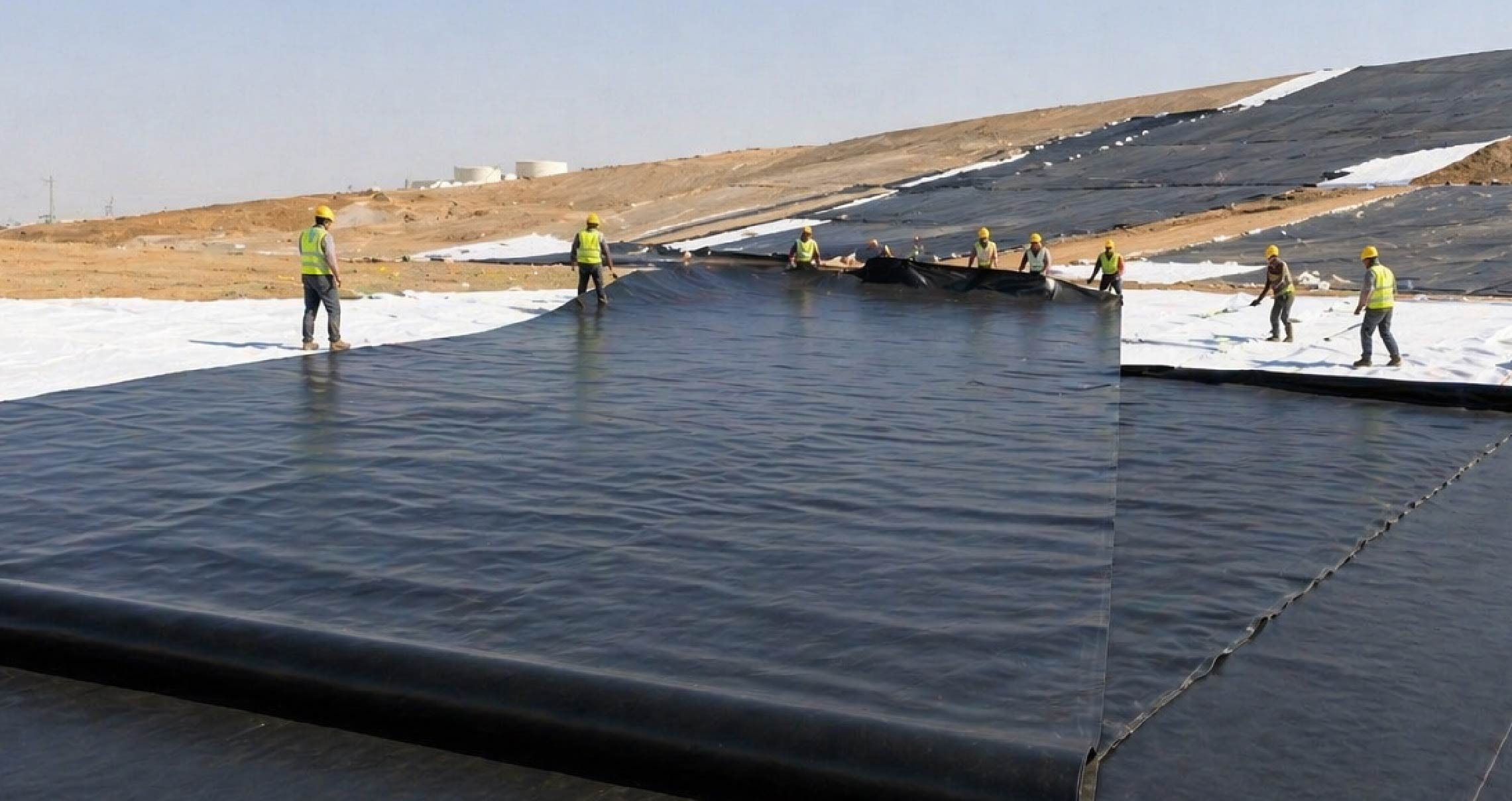
Integration of HDPE liner with geotechnical systems
At MEGS, HDPE liner is part of a complete engineered system, not just a single material.
Protection with geotextile membrane
A geotextile membrane is installed above or below the HDPE liner to protect it from puncture and improve performance.
Slope stabilization support
In sloped applications, HDPE liners are integrated with systems like geocell or steep slope stabilization to ensure stability and prevent sliding.
Drainage system integration
Proper drainage systems are designed to control water pressure and enhance the efficiency of the liner system.
MEGS approach to HDPE liner solutions
At MEGS, delivering HDPE liner systems involves a full-service approach.
Site assessment and engineering design
Each project begins with evaluating soil conditions, fluid behavior, and environmental factors.
Supply of high-quality HDPE liner systems
MEGS provides advanced HDPE liner materials designed to meet international standards and project requirements.
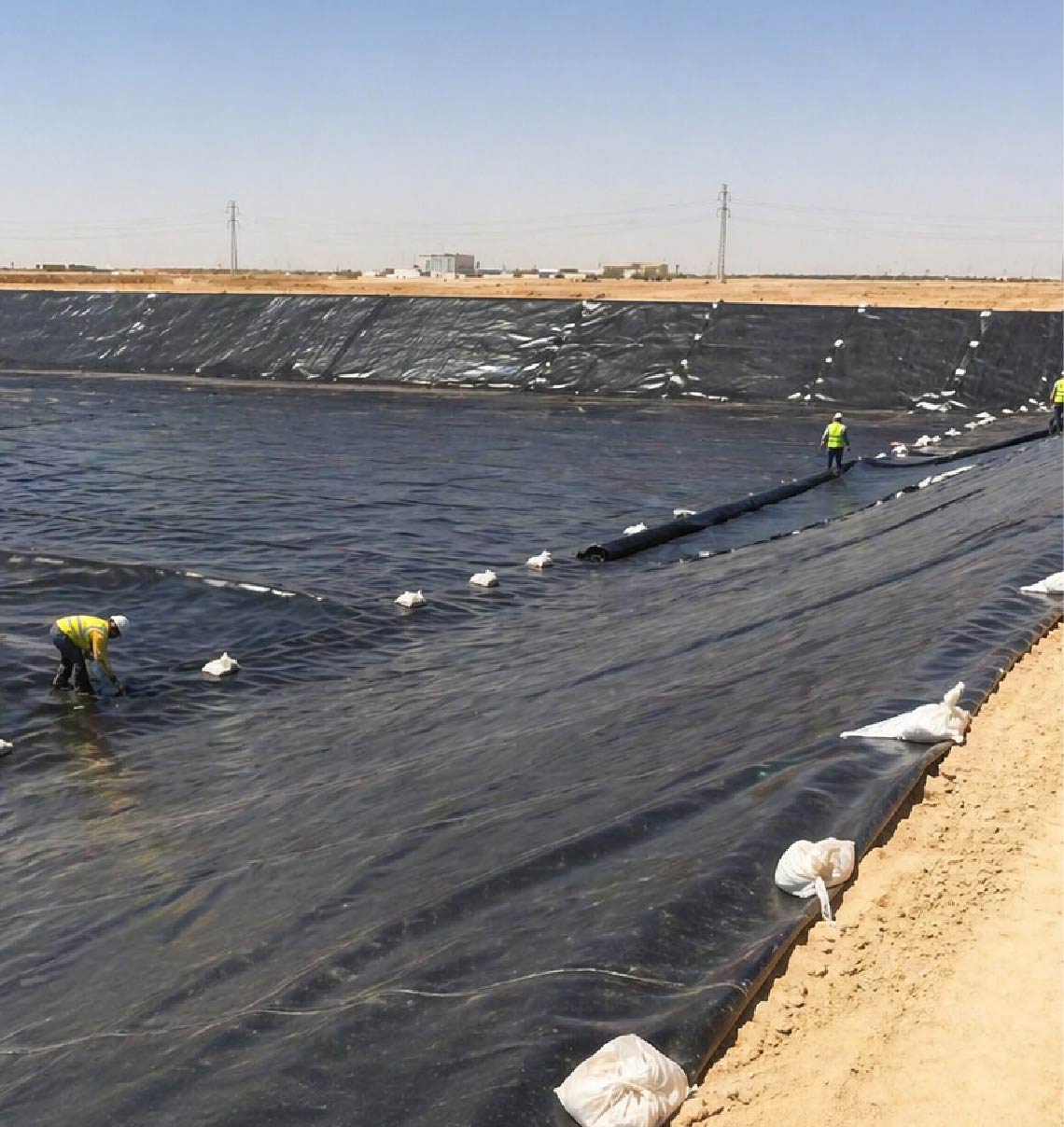
Professional installation and welding
- Installation is critical to performance. MEGS ensures:
- Proper surface preparation
- Accurate liner placement
- High-quality welding and sealing
- Leak testing and quality control
Quality assurance and long-term performance
MEGS follows strict quality control procedures to ensure durability and compliance with project specifications.

Advantages of using HDPE liner systems
Environmental protection
Prevents contamination of soil and groundwater, supporting environmental sustainability.
Long service life
HDPE liners can last for decades when properly installed and protected.
Cost efficiency
Reduces maintenance costs and prevents expensive environmental damage.
Versatility
Suitable for a wide range of applications, from water infrastructure to industrial containment.
Reliable performance in harsh conditions
Designed to withstand extreme climates, including high temperatures in Saudi Arabia.
HDPE liner and sustainable infrastructure development
As infrastructure projects expand across Saudi Arabia, sustainability is becoming a key priority.
HDPE liner systems contribute by:
- Reducing environmental risks
- Supporting safe waste management
- Improving water conservation
- Extending infrastructure lifespan
Therefore, they play a critical role in modern, sustainable development strategies.
Conclusion
The HDPE liner is a fundamental component in modern containment and environmental protection systems. Its ability to prevent leakage, resist harsh conditions, and adapt to complex designs makes it essential in projects such as landfill construction, water infrastructure, and industrial applications. However, achieving optimal performance requires more than just selecting the right material. Through its integrated approach — combining engineering expertise, product