
Modern pavement rehabilitation is becoming increasingly important as transportation networks age under growing traffic demands and changing environmental conditions. Across Saudi Arabia and the wider Middle East, many roads experience premature deterioration due to repeated traffic loading, thermal expansion and contraction, and the propagation of existing pavement defects into newly constructed asphalt overlays.
One of the most common maintenance challenges is reflective cracking, where cracks and joints within existing pavements migrate upward through new asphalt layers, significantly reducing pavement service life and increasing maintenance costs.
Traditional overlay solutions often rely solely on increasing asphalt thickness. While thicker overlays may temporarily delay crack propagation, they rarely eliminate the underlying stress concentrations responsible for reflective cracking.
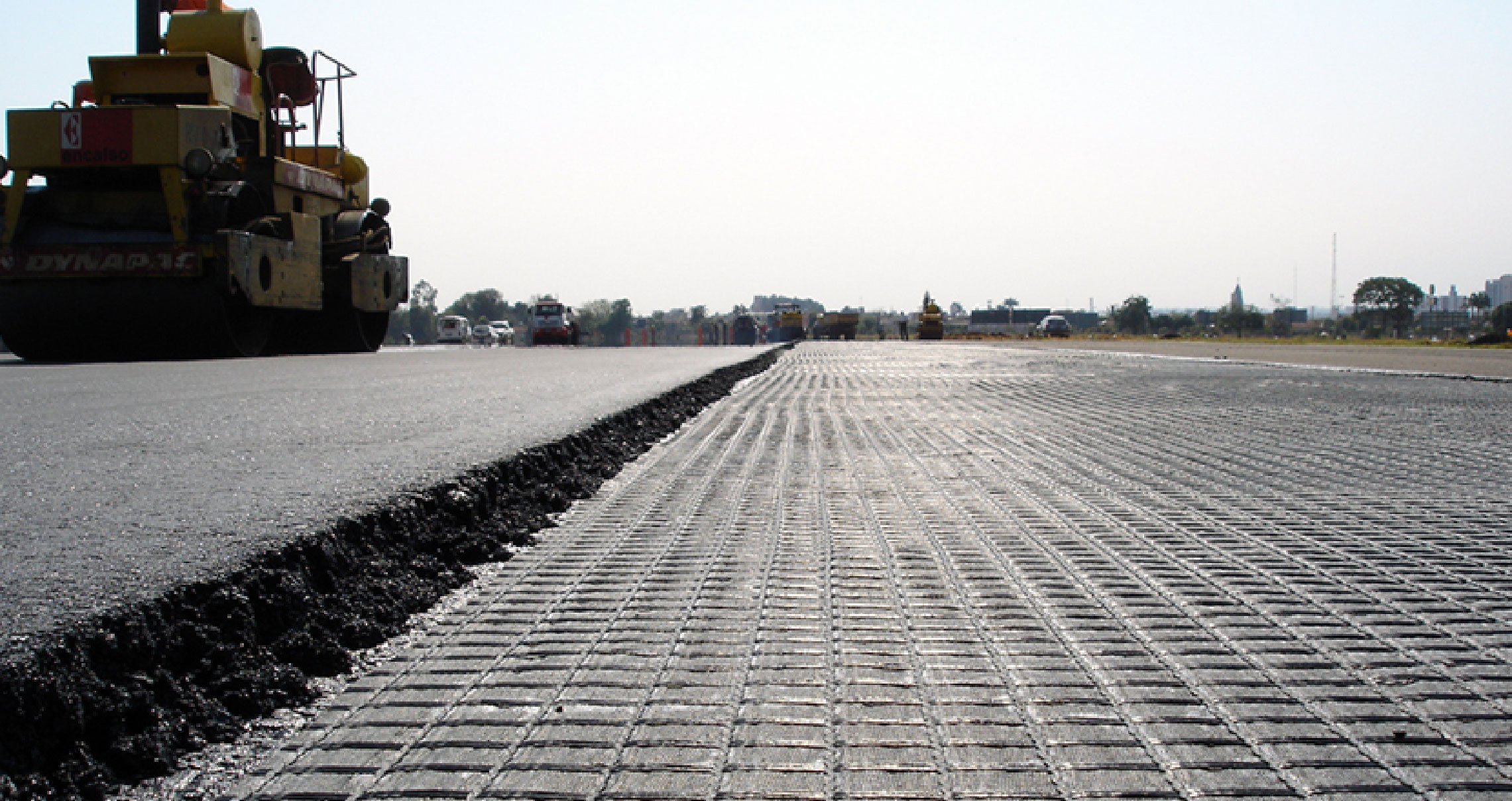
Asphalt reinforcement using polyester geogrids has emerged as one of the most effective solutions for extending pavement life by redistributing tensile stresses within asphalt layers. When combined with a lightweight nonwoven geotextile bonded to the reinforcement, these systems also improve interlayer bonding, waterproofing, and stress absorption, creating a comprehensive pavement preservation solution.
At MEGS, asphalt reinforcement systems are delivered in partnership with STRATA Geosystems, combining advanced geosynthetic technologies with engineering expertise to optimize pavement performance under demanding traffic and environmental conditions.
Understanding Asphalt Reinforcement
Unlike geocells or subgrade stabilization systems, asphalt reinforcement does not increase the bearing capacity of weak soils.
Instead, asphalt reinforcement improves the structural performance of the asphalt layers themselves by reinforcing the asphalt overlay and reducing tensile strain concentrations that initiate cracking.
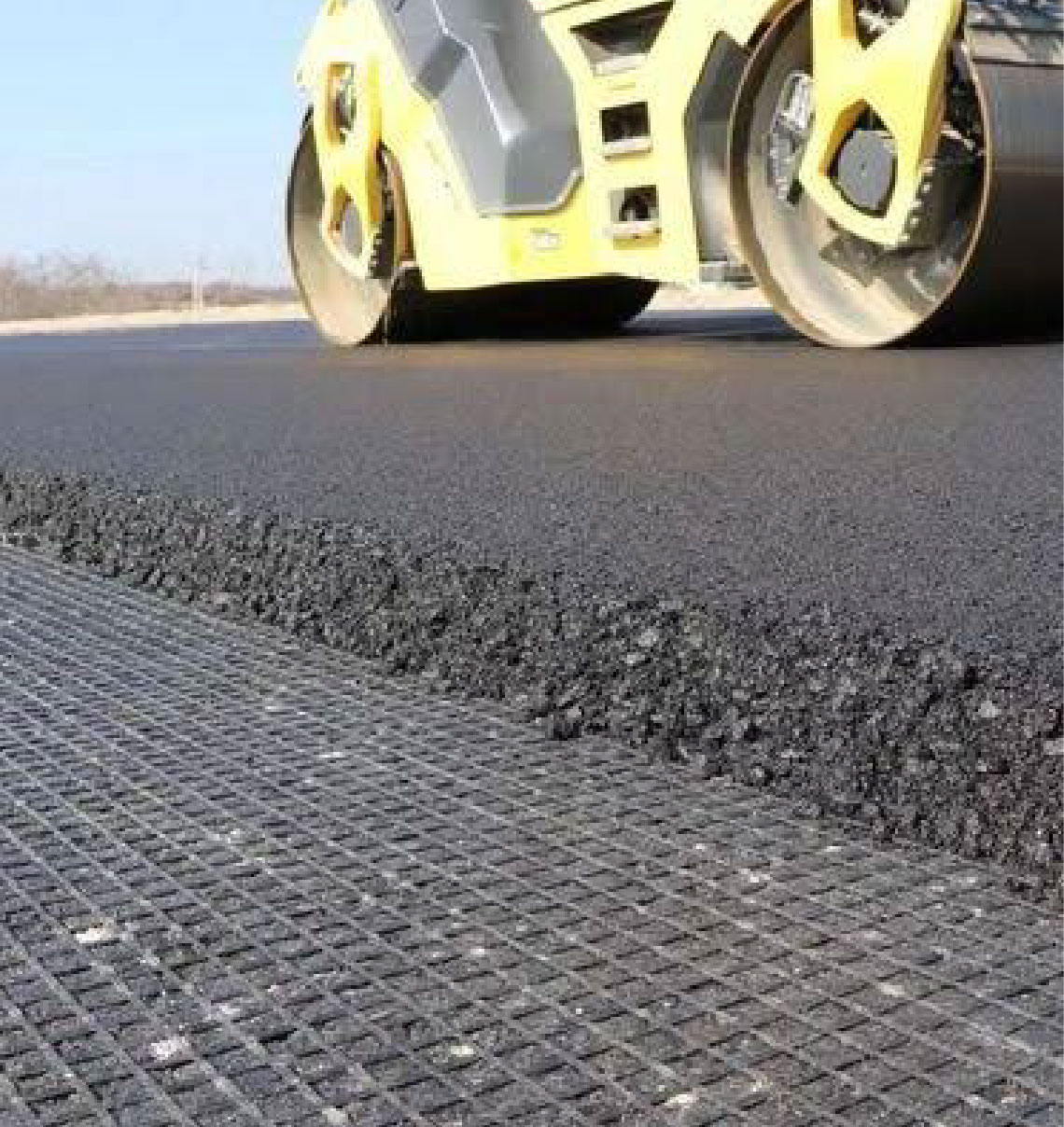
The reinforcement layer is typically installed between existing and new asphalt layers, creating a stress-relieving composite system that delays crack propagation while maintaining pavement integrity.
Modern asphalt reinforcement systems consist of:
- High-strength polyester geogrid
- Lightweight nonwoven geotextile stitched to the geogrid
- Bituminous tack coat ensuring composite bonding with asphalt
Together, these components create a reinforced asphalt layer capable of distributing stresses more efficiently than asphalt alone.
Why Asphalt Reinforcement Is Essential
Road deterioration rarely begins at the pavement surface.
Existing pavements accumulate:
- Fatigue cracks
- Thermal cracks
- Construction joints
- Utility trench reinstatements
- Reflective movement from underlying layers
Without reinforcement, these discontinuities quickly propagate into new overlays.
Common pavement failures include:
- Reflective cracking
- Longitudinal cracking
- Transverse cracking
- Block cracking
- Surface raveling
- Moisture infiltration
Asphalt reinforcement interrupts this deterioration process by reducing localized tensile stresses within the asphalt layer.

The Engineering Mechanisms Behind Polyester Geogrid Reinforcement
Tensile Reinforcement
Asphalt performs exceptionally well in compression but possesses relatively low tensile strength.
Traffic loading induces tensile stresses within the lower portion of asphalt layers, particularly above existing cracks and joints.
The polyester geogrid carries a significant portion of these tensile forces, reducing strain concentrations within the asphalt and delaying crack initiation.
Stress Redistribution
The geogrid distributes localized traffic stresses over a wider area.
Instead of allowing concentrated stresses to develop directly above existing cracks, the reinforcement spreads these stresses throughout the reinforced asphalt layer.
This mechanism significantly delays reflective cracking.
Crack Arrest Mechanism
When cracks begin to propagate upward, the polyester reinforcement bridges the crack and resists its opening.
Rather than allowing rapid crack growth, the reinforcement absorbs tensile forces and slows crack propagation.
The result is a substantial increase in pavement service life.
The Importance of the Stitched Nonwoven Layer
One of the distinguishing features of advanced polyester reinforcement systems is the lightweight nonwoven geotextile stitched directly to the geogrid.
This component performs several critical functions beyond simple reinforcement.
Stress Absorption
The nonwoven layer acts as a stress-relief membrane between existing and new asphalt layers.
It accommodates minor differential movements while reducing localized stress concentrations.
Waterproofing
When saturated with bitumen from the tack coat, the nonwoven layer forms an effective moisture barrier.
This reduces water infiltration into the pavement structure, protecting the underlying layers from moisture-related deterioration.
Improved Bonding
The stitched construction ensures proper positioning during installation while improving adhesion between pavement layers.
Unlike loose fabrics, the stitched composite minimizes slippage during paving operations.

Why Polyester Outperforms Fiberglass Reinforcement
Although fiberglass grids have historically been used for asphalt reinforcement, polyester geogrids offer several important engineering advantages.
Superior Flexibility
Fiberglass is inherently brittle.
During transportation, handling, and installation, fiberglass grids are susceptible to breakage and localized damage.
Polyester geogrids remain flexible throughout installation while maintaining high tensile strength.
Improved Installation Damage Resistance
Construction equipment, aggregate movement, and paving operations frequently damage brittle reinforcement materials.
Polyester exhibits significantly greater resistance to installation damage, ensuring that the designed reinforcement properties are maintained throughout construction.
Better Fatigue Performance
Road pavements experience millions of load cycles during their design life.
Polyester fibers exhibit excellent fatigue resistance under repeated loading, allowing long-term stress redistribution without brittle failure.
Higher Elongation Capacity
Unlike fiberglass, polyester possesses controlled elongation characteristics.
This enables the reinforcement to accommodate small pavement movements without sudden fracture while still maintaining sufficient stiffness for crack control.
Enhanced Durability
Polyester geogrids are highly resistant to:
- Alkali exposure
- Moisture
- Chemical degradation
- Environmental aging
making them well suited for long-term pavement reinforcement applications.
Advantages Over Polypropylene Reinforcement
Some reinforcement products utilize polypropylene grids.
However, polypropylene has a significantly lower melting temperature, typically between 160°C and 170°C.
Fresh asphalt is commonly placed at temperatures ranging from 140°C to 170°C, depending on the mix design and paving conditions.
Although complete melting may not occur, prolonged exposure to high paving temperatures can reduce the material’s physical and mechanical properties, particularly stiffness and long-term tensile performance.
Polyester, by comparison, has a much higher melting point—typically around 250–260°C—providing a substantially greater thermal safety margin during asphalt installation. This allows the reinforcement to better retain its mechanical properties under paving temperatures and contribute more reliably to long-term pavement performance.
Limitations of Asphalt Reinforcement
Although asphalt reinforcement significantly improves pavement durability, it should not be considered a solution for every pavement problem.
The reinforcement layer functions within the asphalt structure only.
It does not:
- Increase subgrade bearing capacity
- Stabilize soft foundation soils
- Prevent settlement caused by weak subgrades
- Replace proper pavement structural design
Where pavement failures originate from weak or unstable soils, reinforcing only the asphalt layer will not address the root cause of deterioration.
In these situations, asphalt reinforcement should be combined with foundation improvement measures such as:
- Geocell confinement systems
- Biaxial geogrids for base reinforcement
- Stabilization geotextiles
- Drainage geocomposites
- Subsurface drainage systems
A successful pavement rehabilitation strategy must therefore address both the structural capacity of the foundation and the long-term performance of the asphalt surfacing.

Typical Applications
Polyester asphalt reinforcement systems are widely used for:
- Highway rehabilitation
- Airport pavements
- Industrial roads
- Container terminals
- Heavy-duty logistics facilities
- Urban road overlays
- Bridge approaches
- Municipal road maintenance programs
Why MEGS Uses STRATA Polyester Asphalt Reinforcement Systems
MEGS delivers advanced asphalt reinforcement solutions through its partnership with STRATA Geosystems.
Each project begins with a detailed engineering assessment of:
- Existing pavement condition
- Crack patterns
- Traffic loading
- Overlay thickness
- Environmental exposure
- Pavement rehabilitation objectives
The MEGS approach includes:
- Pavement condition assessment
- Engineering design support
- Product selection
- Shop drawings
- Installation supervision
- Quality assurance
- Technical field support
This integrated methodology ensures that the reinforcement system is selected and installed to maximize pavement performance while avoiding the premature failures often associated with poorly designed overlay systems.
Sustainability and Life-Cycle Benefits
Asphalt reinforcement contributes to more sustainable infrastructure by extending pavement life and reducing the frequency of rehabilitation.
Key benefits include:
- Longer maintenance intervals
- Reduced asphalt consumption
- Lower construction-related emissions
- Reduced traffic disruption
- Lower life-cycle costs
- Improved utilization of existing pavement assets
Conclusion
Asphalt reinforcement has become an essential component of modern pavement rehabilitation, providing an effective means of delaying reflective cracking, redistributing tensile stresses, and extending the service life of asphalt overlays.
Polyester geogrid systems with a stitched lightweight nonwoven geotextile offer significant advantages over traditional fiberglass and polypropylene reinforcement, including superior installation durability, enhanced fatigue resistance, improved flexibility, reliable thermal stability during asphalt placement, and added waterproofing and stress-relief benefits.
However, asphalt reinforcement should be applied where the underlying pavement structure is fundamentally sound. When failures originate from weak subgrades or inadequate foundation support, reinforcement of the asphalt layer alone cannot resolve the underlying problem. In such cases, it should form part of an integrated pavement solution incorporating foundation stabilization technologies such as geocells, geogrids, drainage geocomposites, and geotextiles.
Through its partnership with STRATA Geosystems, MEGS delivers complete pavement rehabilitation solutions that combine advanced geosynthetic technologies with sound engineering practice to provide durable, sustainable, and cost-effective transportation infrastructure across Jordan, Saudi Arabia, and the wider region.