
The fundamentals of geotechnical engineering represent the scientific and practical principles that govern how soil and rock behave under different loading and environmental conditions. In simple terms, geotechnical engineering studies the ground beneath our structures and determines how it will respond when we build on it.
Every infrastructure project — whether road construction, railway engineering, landfill construction, or water infrastructure — depends on understanding these fundamentals. Without proper soil analysis and ground evaluation, even the most well-designed structures may suffer from settlement, cracking, or long-term instability.
At its core, Geotechnical engineering connects soil, rock, and groundwater behavior to real-world construction, ensuring stable foundations and structures. Its true value lies in turning these principles into properly supplied and professionally installed engineered systems.
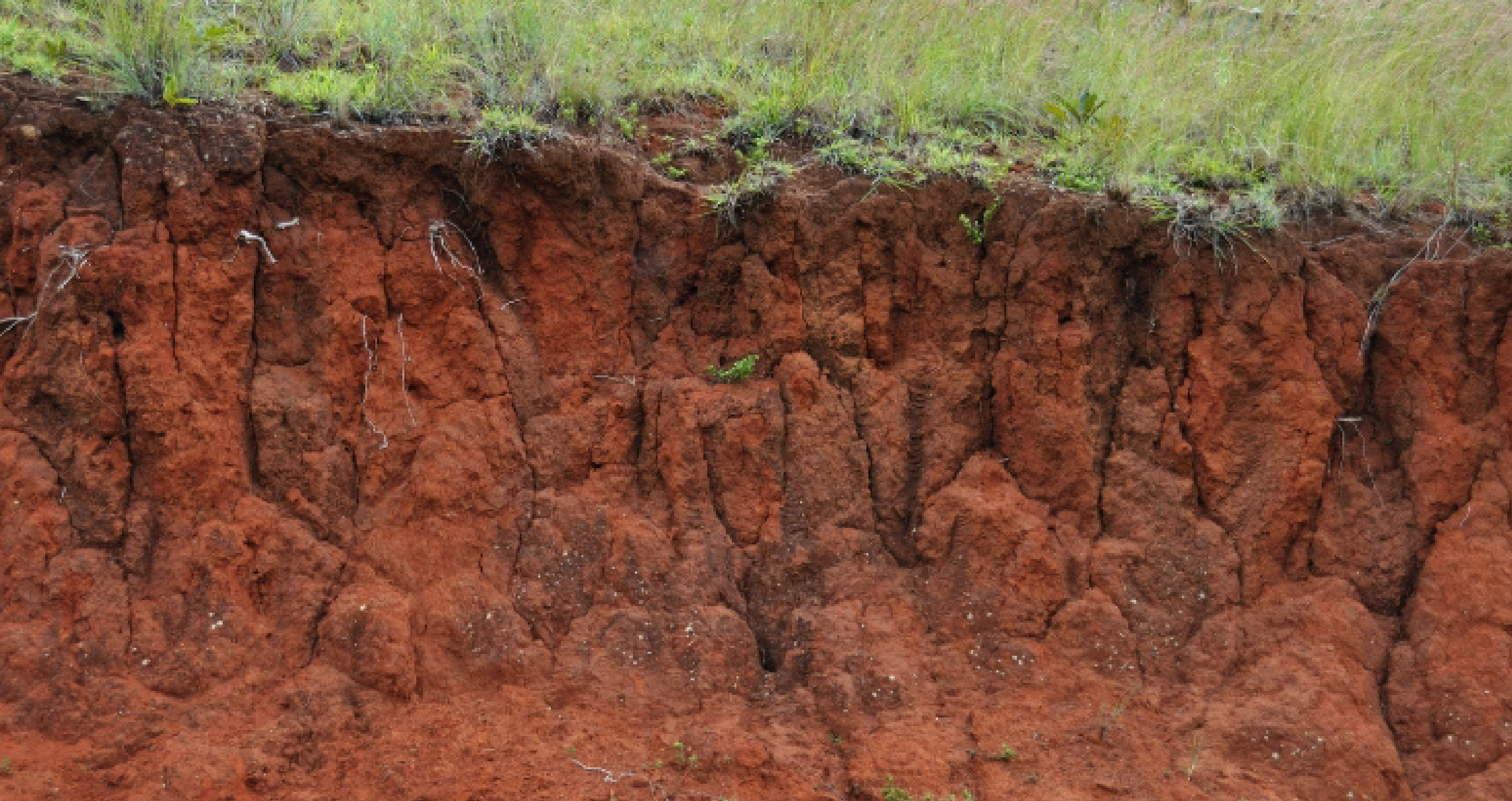
Core Concepts Behind the Fundamentals of Geotechnical Engineering
To fully understand the fundamentals of geotechnical engineering, it is essential to examine the main components that define soil behavior and structural performance.
1. Soil Classification and Composition
Soil is not a uniform material. It may consist of clay, silt, sand, gravel, or rock fragments, each with different engineering properties. Consequently, identifying soil type is the first step in any site preparation process.
Engineers evaluate:
- Grain size distribution
- Moisture content
- Density
- Plasticity characteristics
This classification directly influences decisions in road design, embankment construction, and foundation selection. For example, weak or highly plastic soils may require reinforcement systems such as geogrid mesh or geo geocell confinement to improve stability.
2. Strength and Deformation Properties
Another key element of the fundamentals of geotechnical engineering is understanding soil strength and deformation.
Parameters such as:
- Uniaxial compressive strength
- Uniaxial compressive strength of rock
- Shear strength
- Consolidation behavior
For instance, in retaining wall design, calculating soil lateral pressure accurately is crucial. Whether it’s a gravity or reinforced concrete retaining wall, these strength parameters determine structural dimensions and reinforcement, helping prevent excessive settlement and long-term damage.
3. Groundwater and Drainage Behavior
Water significantly affects soil performance. When groundwater levels rise, soil strength may decrease. Therefore, proper drainage line planning is critical.
Geotechnical engineers analyze:
- Permeability
- Seepage patterns
- Hydrostatic pressure
To prevent soil erosion and protect structures, solutions such as geotextile fabric, geotextile membrane, and non woven geotextile layers are often incorporated into designs.
In water infrastructure and landfill construction, HDPE liner systems are used to prevent contamination and control seepage, reinforcing environmental sustainability goals.
Application of the Fundamentals of Geotechnical Engineering in Infrastructure
The fundamentals of geotechnical engineering are not limited to calculations and laboratory testing. Instead, they directly shape how modern infrastructure is designed and built.
Road and Highway Construction
In highway construction and roadway construction projects, roads are constantly subjected to dynamic traffic loads. As a result, subgrade stability becomes essential.
If soil conditions are weak, reinforcement systems are introduced, including:
- Geogrid mesh
- Biaxial geogrid
- Geogrid installation layers
- Geocell road construction systems
In geocell and geogrid road construction, soil confinement and load distribution enhance subgrade strength, reduce settlement, and ensure long-term durability, making them essential for road and civil construction companies in Saudi Arabia.
Retaining Structures and Slope Stabilization
Another major application of the fundamentals of geotechnical engineering is slope stability and earth retention.
Whenever elevation changes exist, retaining wall design becomes necessary. Common solutions include:
- Gabion wall systems
- Gabion box and gabion baskets
- Welded wire gabions
- Gabion mattress installations
These systems offer structural support with controlled drainage, while rockfall protection netting on steep slopes further enhances safety, ensuring long-term stability.
Landfill Construction and Environmental Engineering
In landfill construction and landfill mining projects, geotechnical engineering plays a vital role in environmental protection.
Engineered systems typically include:
- HDPE liner systems
- Geotextile sheet protection layers
- Drainage line systems for leachate control
Applying the fundamentals of geotechnical engineering allows engineers to build containment structures that protect groundwater, maintain stability under heavy waste loads, and support sustainable waste management.

From Engineering Theory to Complete Geotechnical Solutions – The MEGS Approach
While the fundamentals of geotechnical engineering provide the scientific framework, successful infrastructure requires proper execution. This is where MEGS adds measurable value.
MEGS operates not only as a geotechnical solutions provider in Saudi Arabia, but also as a supplier of advanced geotechnical products, a specialized installation contractor, and a sector-focused engineering partner.
Rather than supplying materials alone, MEGS links soil investigation results to product selection and on-site execution. After evaluating bearing capacity, settlement potential, and groundwater conditions, the team determines the most suitable reinforcement or containment system.
For example:
- In road construction, MEGS supplies and performs geogrid installation and geocell road construction according to engineering specifications.
- In retaining systems, MEGS provides retaining wall design support, prepares wall drawing documentation, and oversees installation for different retaining wall structures such as Gabion retaining wall, Modular block Wall, Panels MSE Walls, wraparound MSE Wall
- In landfill construction, MEGS supplies HDPE liner systems and ensures controlled Welding & installation of HDPE with quality assurance & testing procedures.
This integrated model ensures that the fundamentals of geotechnical engineering are not only understood — but fully implemented.
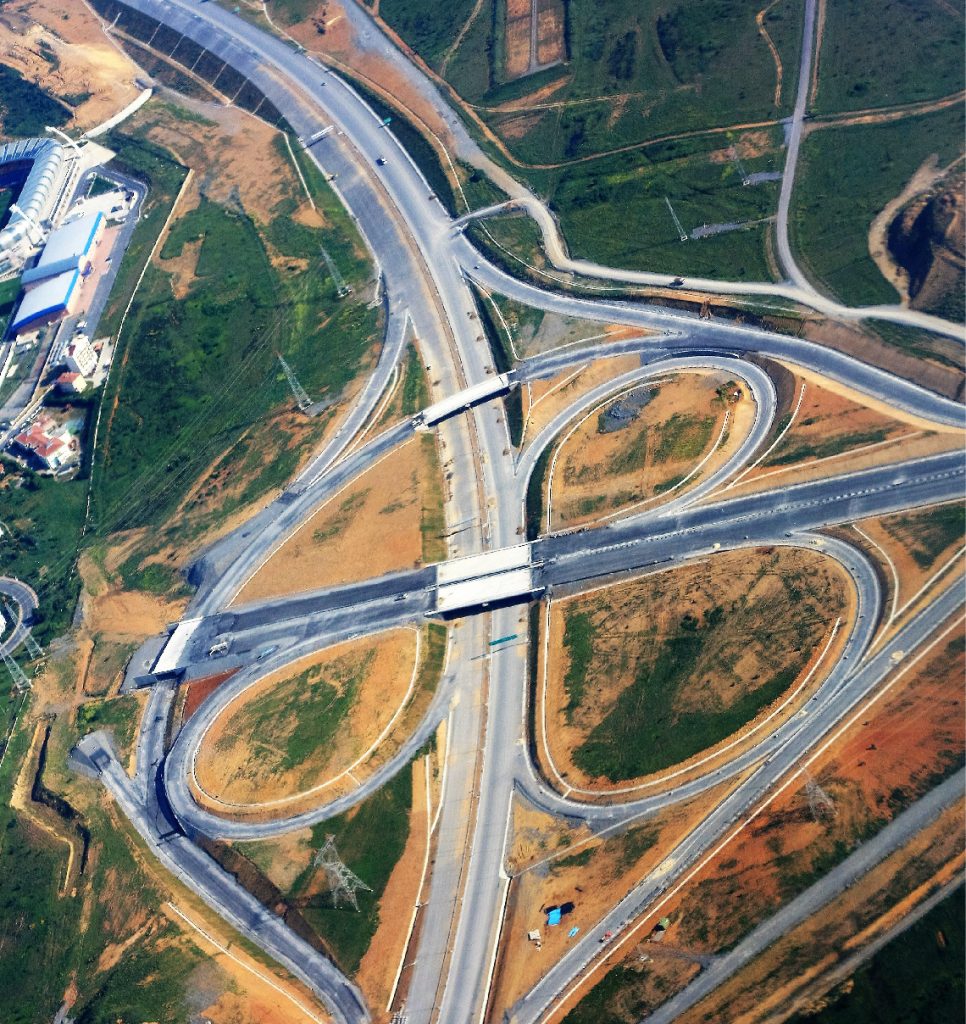
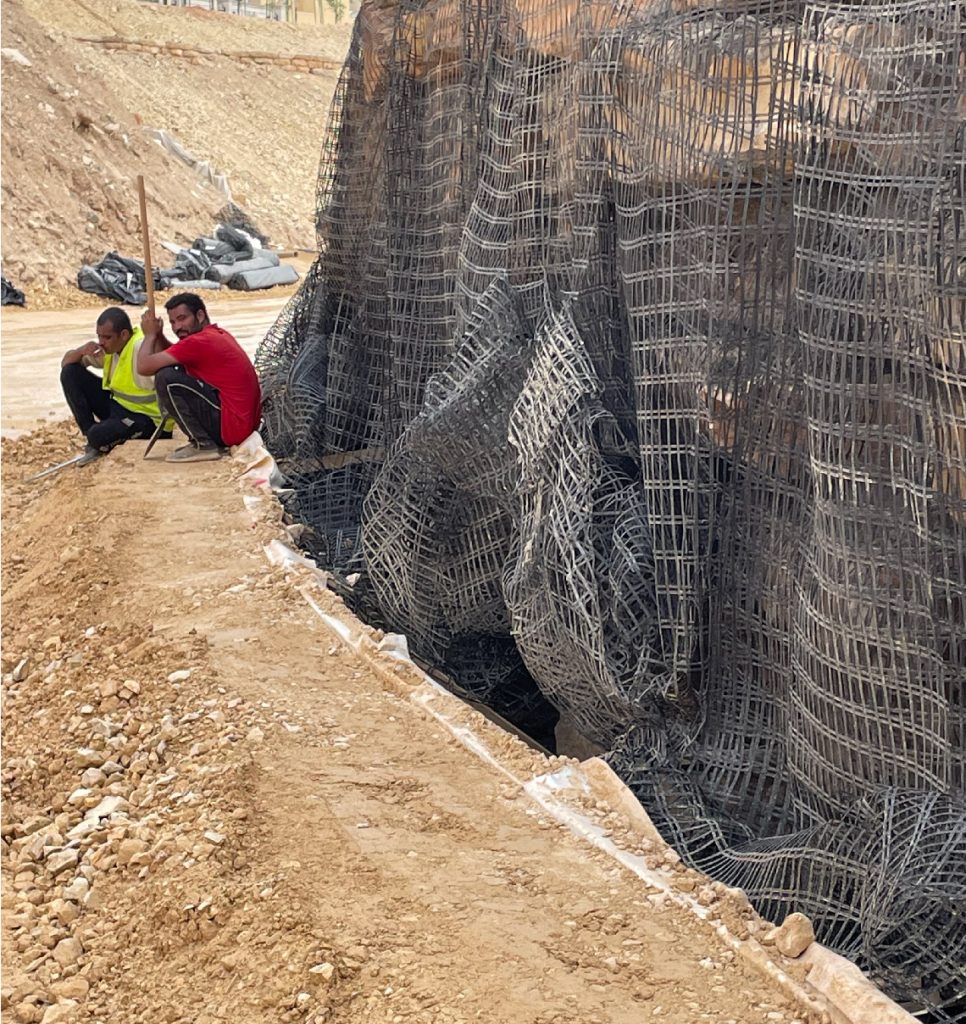
Sector-Focused Geotechnical Solutions
MEGS structures its services around infrastructure sectors, ensuring each solution aligns with project requirements.
Road and Highway Sector
We provide targeted road and highway solutions geogrid reinforcement, embankment stabilization, and ground improvement for durable, long-lasting infrastructure.
Railway Engineering
we deliver subgrade stabilization, geotextile membrane separation, and drainage solutions for safe, durable rail infrastructure.
Water Infrastructure
we provide drainage line support, slope erosion protection, and geotextile filtration to ensure reliable water management systems.
Environmental and Landfill Construction
We supply and install HDPE liners, geotextile protection layers, and ground containment systems for safe, sustainable landfill and environmental projects.
In every case, MEGS provides materials, engineering validation, and professional installation delivering a complete geotechnical solution rather than isolated products.
Why the Fundamentals of Geotechnical Engineering Matter
Ultimately, every structure depends on the stability of the ground beneath it. Ignoring soil behavior can lead to:
- Excessive settlement
- Structural cracking
- Slope failure
- Increased maintenance costs
However, by applying the fundamentals of geotechnical engineering and integrating engineered systems such as geogrid, geocell, gabion wall structures, and HDPE liner containment, projects achieve:
- Improved load distribution
- Enhanced slope stability
- Effective soil erosion control
- Long-term durability
Conclusion
The fundamentals of geotechnical engineering form the foundation for safe, stable, and sustainable infrastructure, covering soil behavior, strength analysis, groundwater control, and reinforcement design.
At MEGS, we go beyond theory by supplying advanced geotechnical products, providing professional installation, and delivering sector-focused solutions that turn engineering principles into durable, high-performance systems. When the fundamentals of geotechnical engineering are properly applied and executed, infrastructure remains strong and reliable for generations.